Case Study · Computer vision for Badenova
SewerScan: AI sewer inspection for Badenova
AI-assisted sewer inspection for Badenova: a pretrained YOLO model tested on real inspection data, and a review cockpit with a geo map and Kanban board.
STARTING POINT
Problem
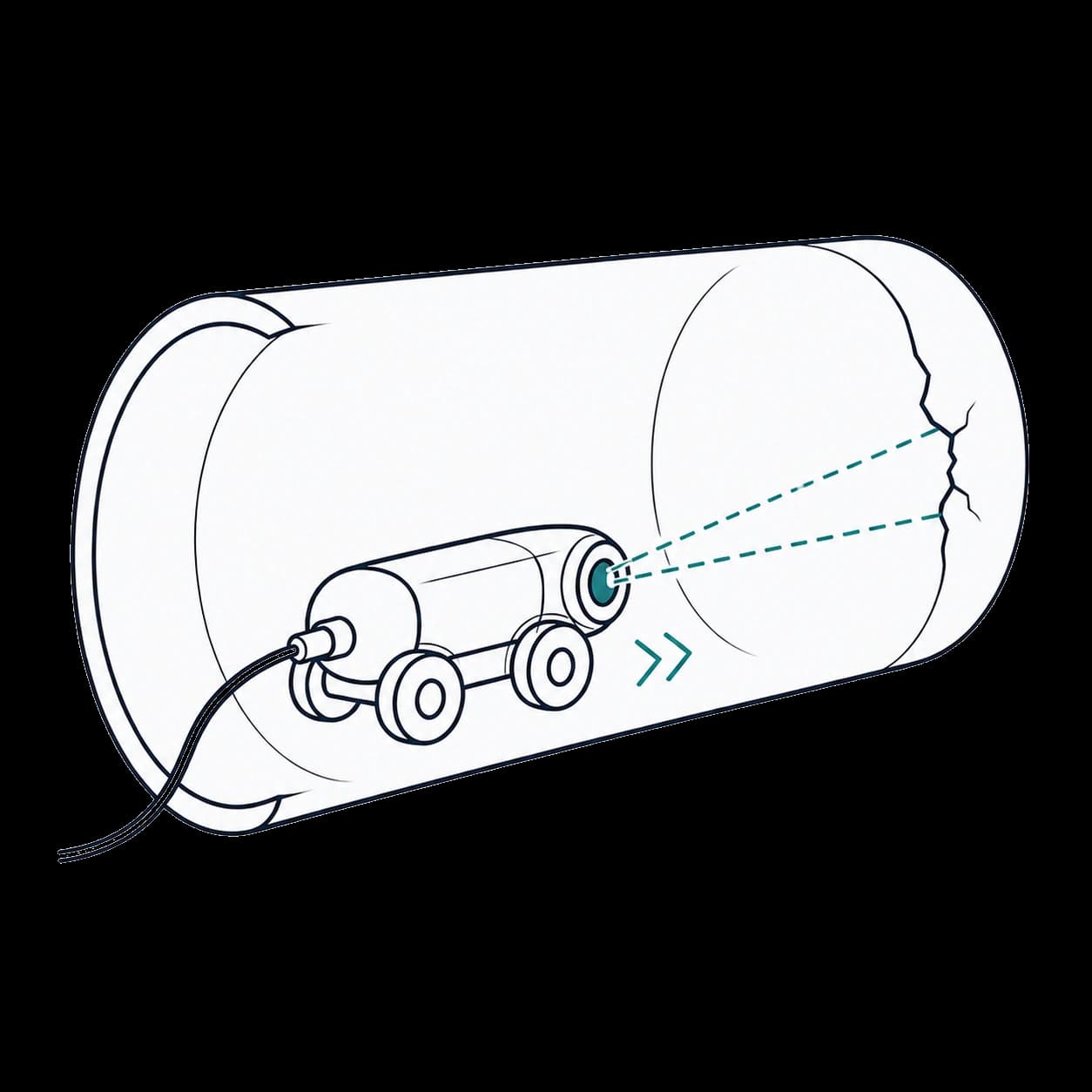
Sewer inspection is manual work: a technician reviews every frame of every inspection video, and it can take up to seven days before a critical finding reaches the right desk.
HOW IT WORKS
Solution & architecture
Solution
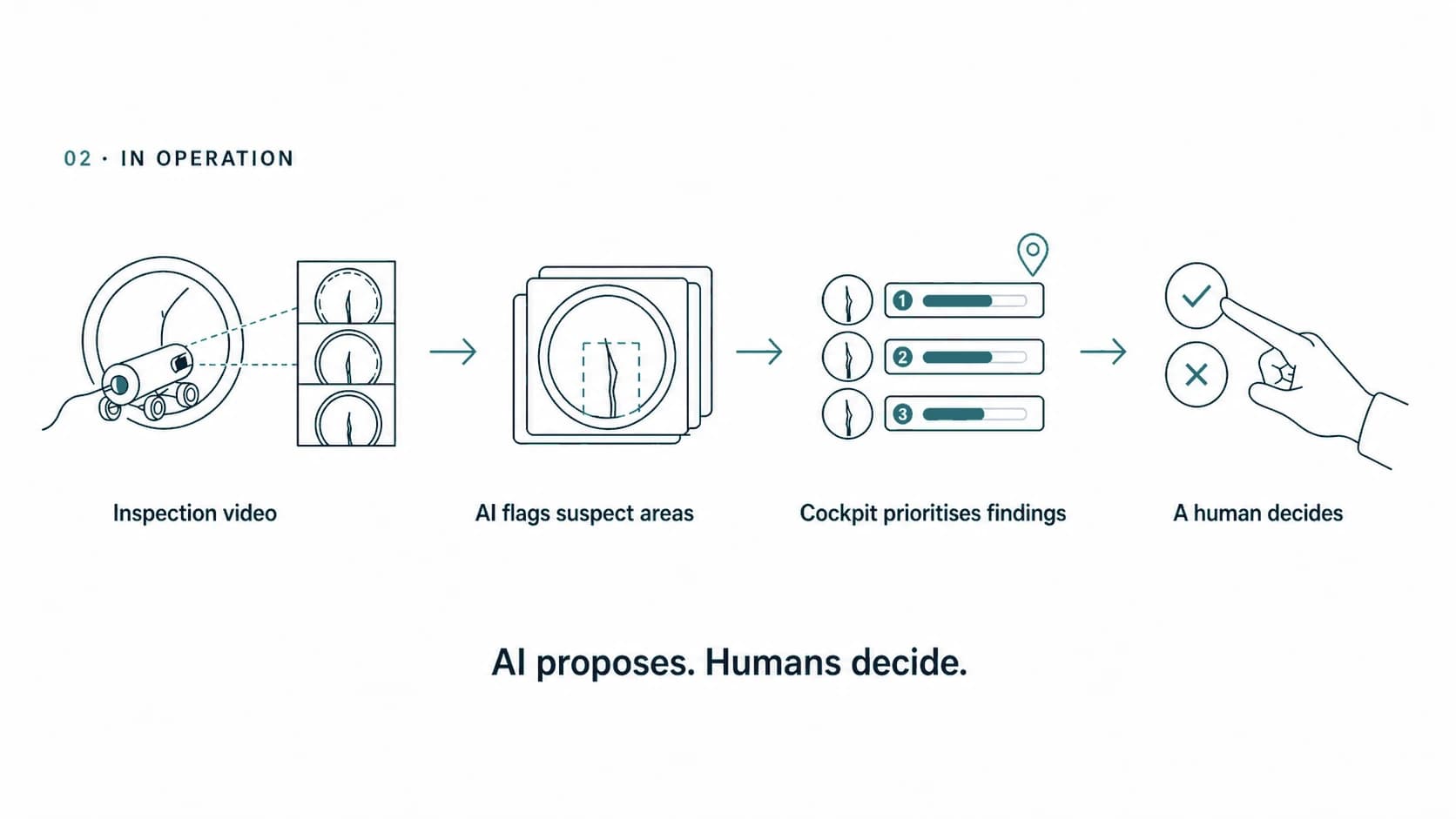
The model flags, the inspector decides
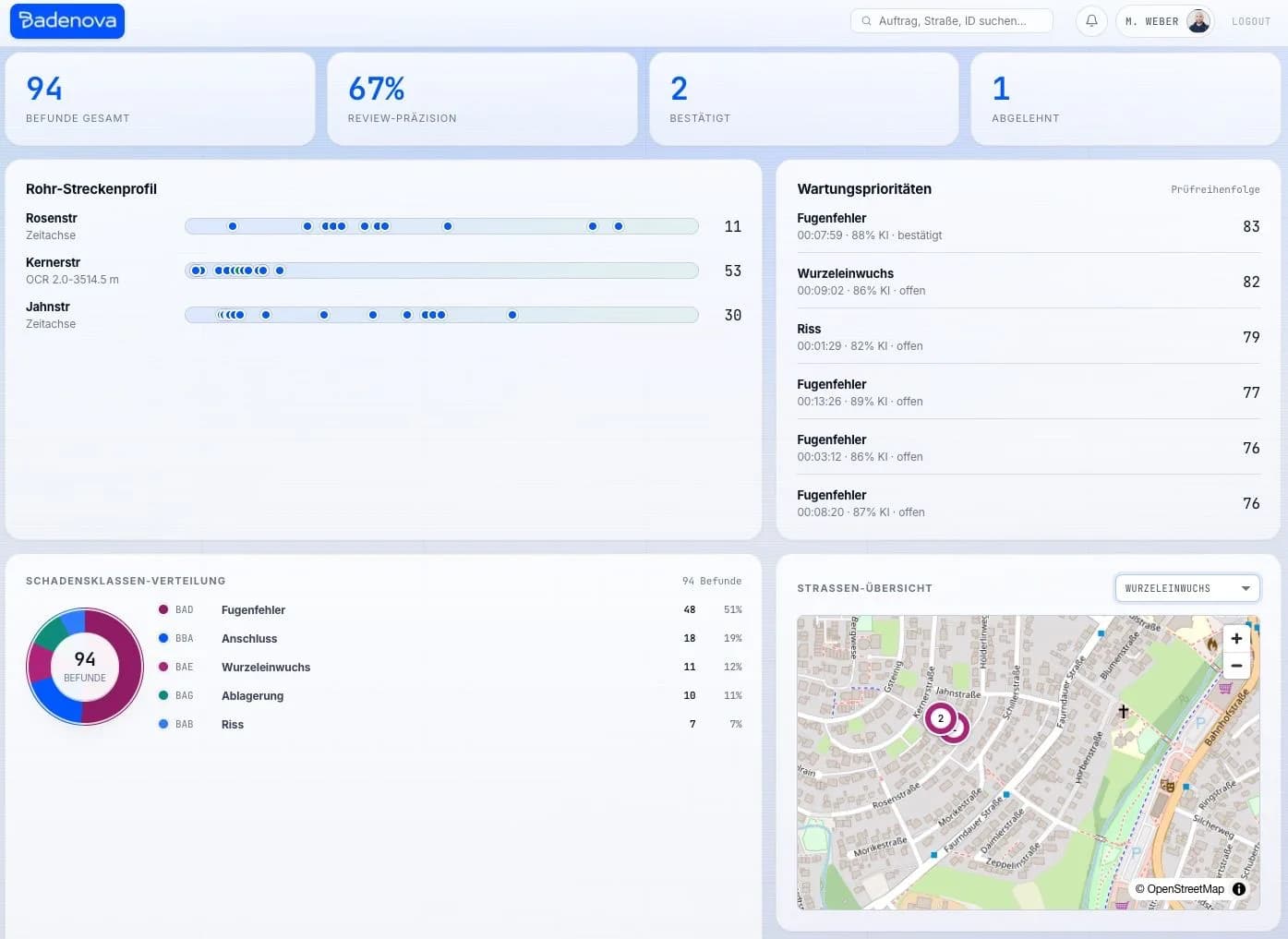
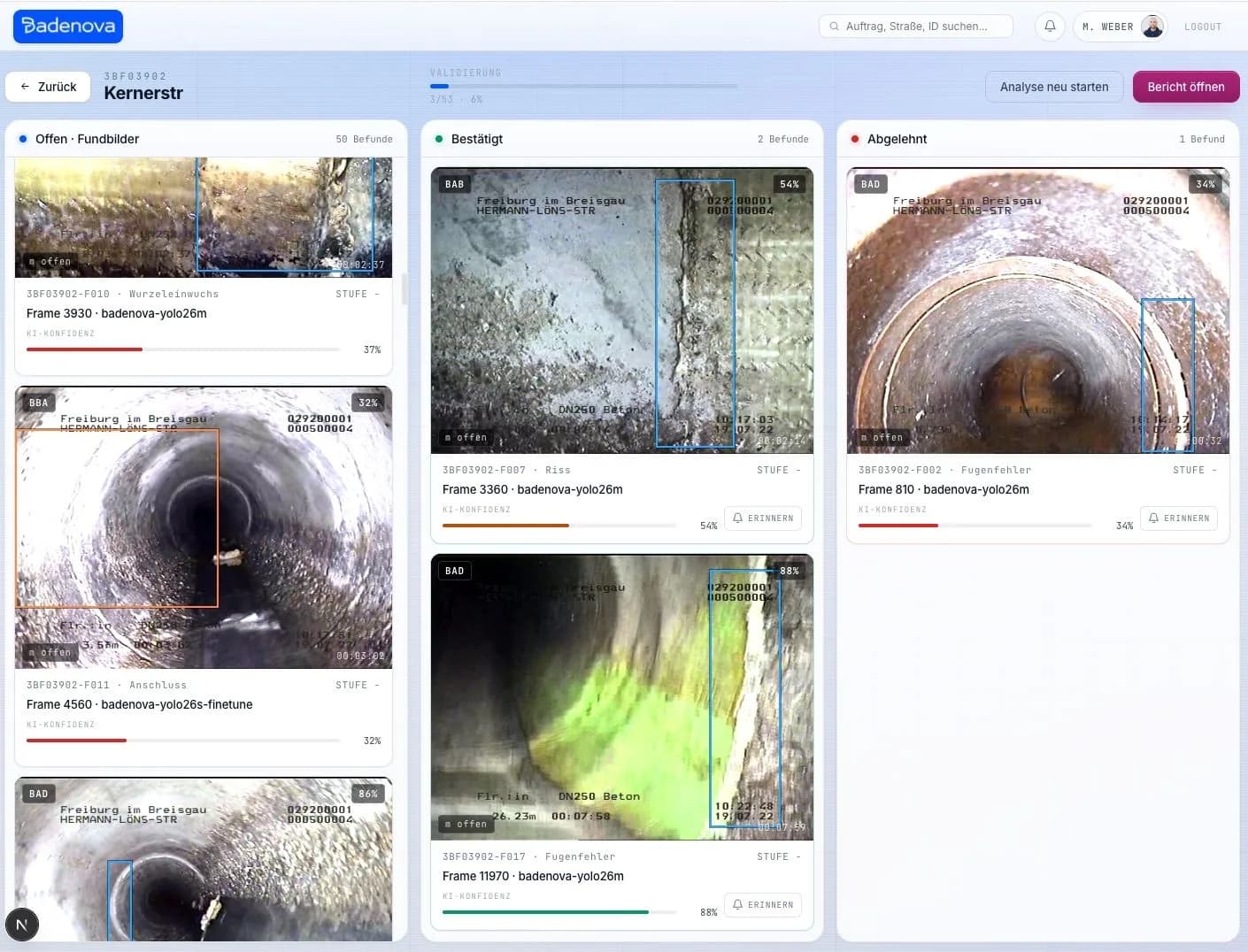
A pretrained YOLO model walks through the inspection video frame by frame and flags suspects: cracks, joint faults, connections, root intrusion and deposits. The review cockpit shows inspectors only those frames — sorted by urgency, placed on a map, each with a confidence score. Confirming or rejecting is always a human call; the model releases nothing. I built this with two other developers, 143 of the 192 commits are mine.
- Kanban board with open, confirmed and rejected columns
- Geo map showing the status of every order
- Every finding carries its timestamp in the video and a confidence score
Result
Measured, not estimated
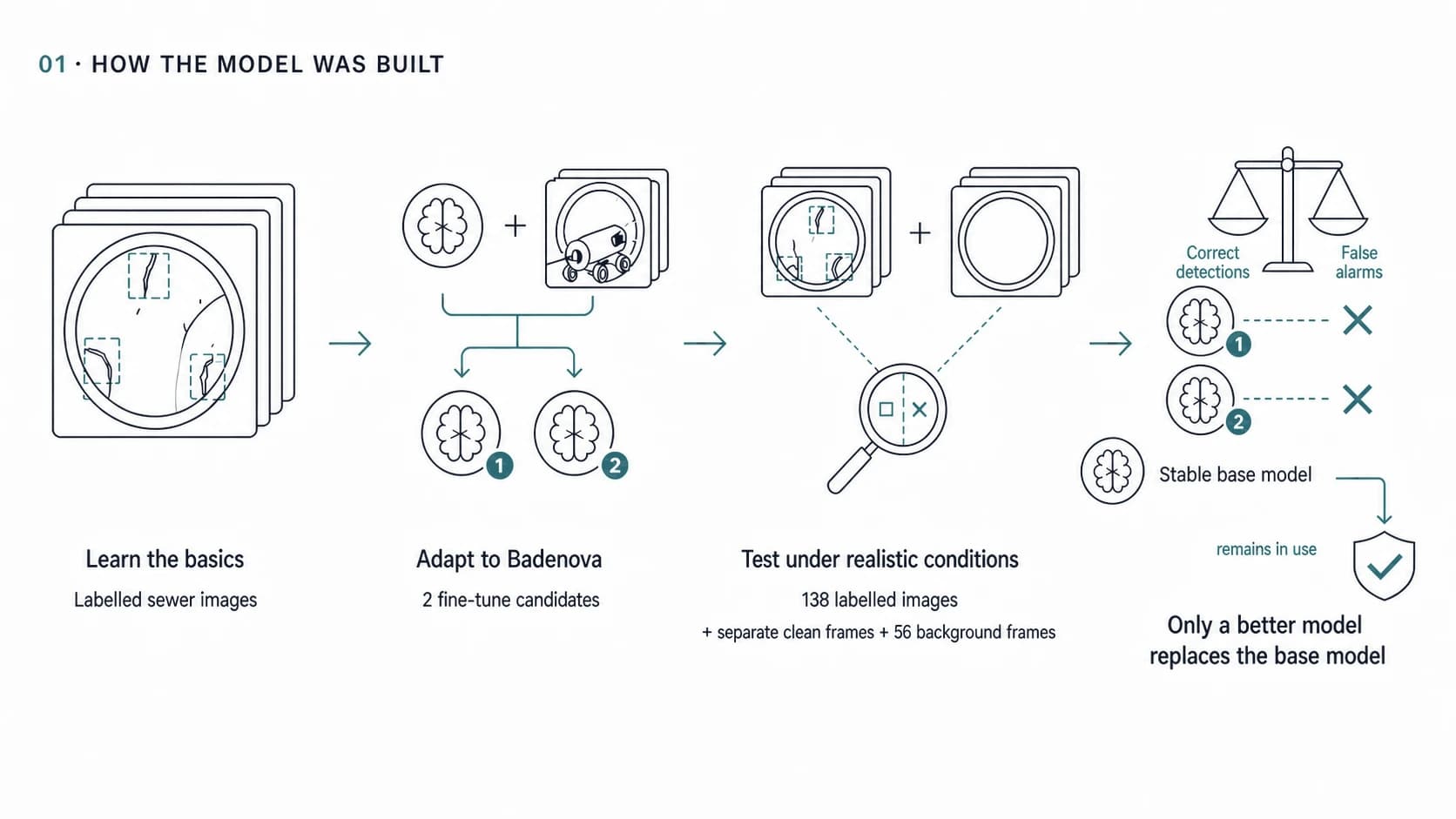
Against manual review we measured a 90 % time saving. Testing ran against held-back images: 138 labelled frames the model had never seen, plus frames with no damage at all — otherwise every model looks good. Two variants adapted to Badenova stayed below the threshold set beforehand and were discarded, so the prototype runs the unchanged base model with cautiously set limits. The jury scored the result 4.4 out of 5.
- Metrics per damage class, not a single overall score
- Threshold fixed in advance, not adjusted to the result afterwards
- Outcome: the unchanged base model, with cautiously set limits
ARCHITECTURE
Check first, then deploy
Results
- measured time saved on review
- 90 %measured time saved on review
- damage classes detected
- 5damage classes detected
- images in the eval set, negative examples included
- 138images in the eval set, negative examples included
- jury score
- 4.4/5jury score
EVIDENCE & SCOPE
What is evidenced — and where the claim ends
These four fields separate my contribution, the project context, the measurement basis and the limits of the results.
- My contribution
- Fullstack and ML development in a team of three. I authored 143 of the repository's 192 commits; the implementation included model integration and the review cockpit with its map, Kanban workflow and human approval step.
- Team & context
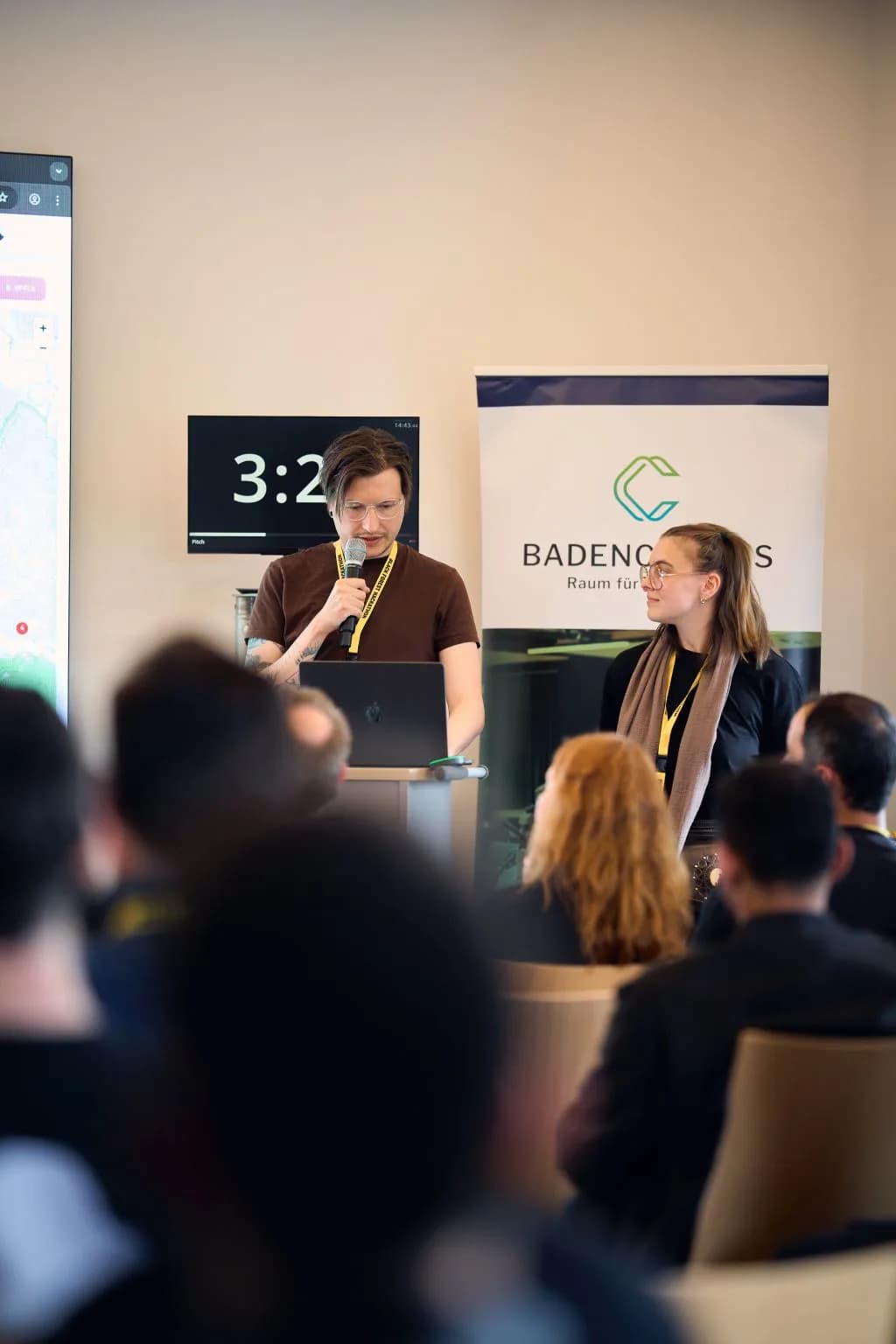
- SewerScan was built with two other developers at the Badenova hackathon and remained a prototype. Badenova hosted the event and supplied the inspection data — that is neither product approval nor an endorsement.
- Measurement basis
- Evaluation used 138 held-back, labelled images including negative examples. Two adapted variants missed the threshold fixed in advance, so the unchanged base model was used. A 90 % time saving was measured against the tested manual review process; the jury scored the project 4.4/5.
- Limitations
- These results come from a hackathon prototype and do not evidence production operation. The 90 % applies to the tested review workflow; no general detection rate or transferability to other sewer networks is claimed. Every finding remains under human control.
BUILT WITH
Tech stack
- Python
- PyTorch
- YOLO
- FastAPI
- Next.js
Links

Does this match what you have in mind?
I build systems that are meant to run in production, not just to demo. If that matches what you have in mind, get in touch.
All case studies